
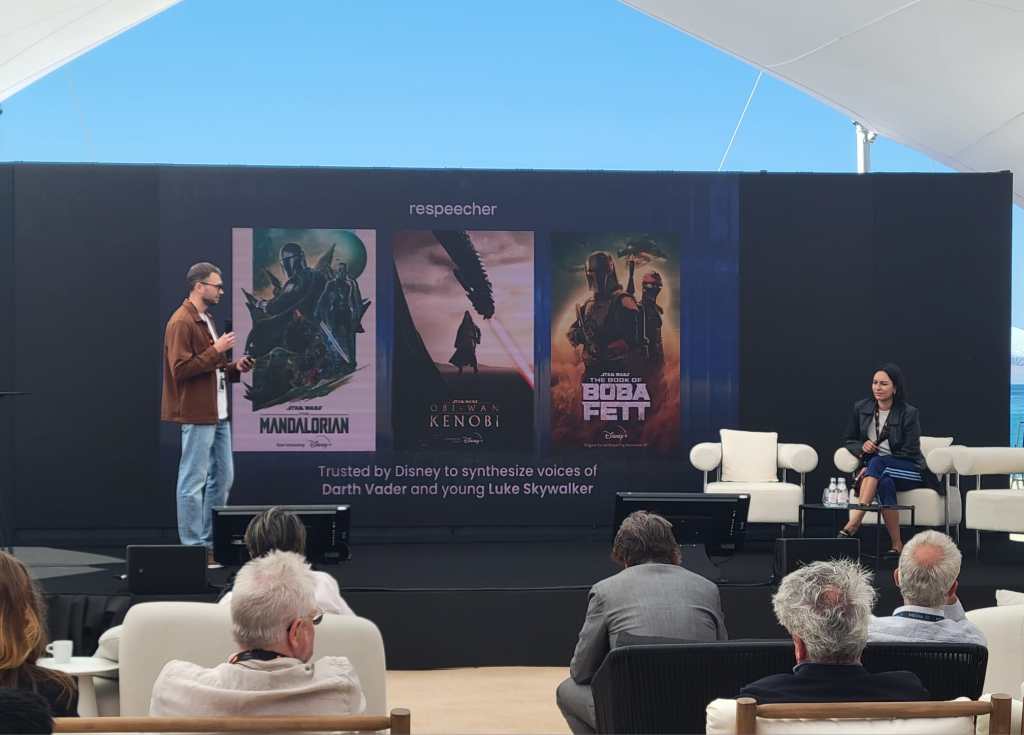
Behind the Curtain: How AI Voice Technology is Transforming Hollywood
In a groundbreaking shift for the entertainment industry, AI voice technology is revolutionizing how films are made, from resurrecting iconic characters to enabling unprecedented creative freedom. Respeecher CEO Alex Serdiuk, in an exclusive interview, reveals how his company’s innovations are helping studios like Disney and Warner Bros. redefine storytelling. As ethical debates intensify, Hollywood stands at the crossroads of art and artificial intelligence.
The Rise of AI Voice Cloning in Blockbuster Productions
Recent advancements in AI voice synthesis have enabled filmmakers to recreate voices with eerie accuracy. Respeecher’s technology, for instance, was used to de-age Mark Hamill’s voice for The Mandalorian, allowing Luke Skywalker to appear as he did in the 1980s. According to Serdiuk, “This isn’t about replacing actors—it’s about expanding creative possibilities while honoring legacy performances.”
The global voice cloning market, valued at $1.2 billion in 2023, is projected to grow at 17% annually, driven by entertainment demand. Key applications include:
- Post-production fixes: Correcting dialogue without costly reshoots
- Localization: Creating authentic regional voiceovers for global releases
- Accessibility: Generating audio descriptions for visually impaired audiences
Ethical Dilemmas and Industry Pushback
While studios embrace the technology, guilds like SAG-AFTRA have raised alarms. “AI threatens to erode performers’ rights if unregulated,” warns voice actor Tara Strong (Batman: The Animated Series). Recent strikes led to new agreements requiring consent and compensation for AI voice usage—a model Respeecher supports. Serdiuk notes, “Transparency is non-negotiable. We work only with licensed data and ethical frameworks.”
A 2024 Pew Research study found 58% of Americans oppose AI replicating deceased actors’ voices without family permission. High-profile cases like James Earl Jones authorizing Darth Vader’s AI voice for future projects demonstrate how negotiated solutions can emerge.
Beyond Nostalgia: AI’s Role in Original Content
Forward-thinking creators are leveraging AI for entirely new narratives. Director Rian Johnson recently experimented with Respeecher’s tools to develop multilingual characters for an upcoming sci-fi series. “It allowed us to cast the best actors globally without language barriers,” he explained. Meanwhile, indie filmmakers use affordable AI voice synthesis to compete with big-budget sound design.
The technology also enables:
- Real-time voice modulation during motion capture performances
- Dynamic NPC dialogue in video game productions
- Personalized audiobook narration at scale
What’s Next for AI in Entertainment?
With 73% of studios now investing in voice AI (per McKinsey’s 2024 report), the technology’s evolution is accelerating. Respeecher plans to launch emotion-aware voice synthesis later this year, while startups like Voicemod target consumer applications. However, legal experts predict tighter IP laws as cases like the AI-generated Drake song litigation set precedents.
As Serdiuk concludes, “The future isn’t about choosing between humans and machines—it’s about collaboration that elevates storytelling.” For audiences, this promises richer experiences; for creators, it demands vigilant ethics. The curtain may be rising on Hollywood’s next act, but the script remains unwritten.
Want to stay ahead of entertainment tech trends? Subscribe to our newsletter for exclusive insights from industry pioneers.
See more CNET Live