
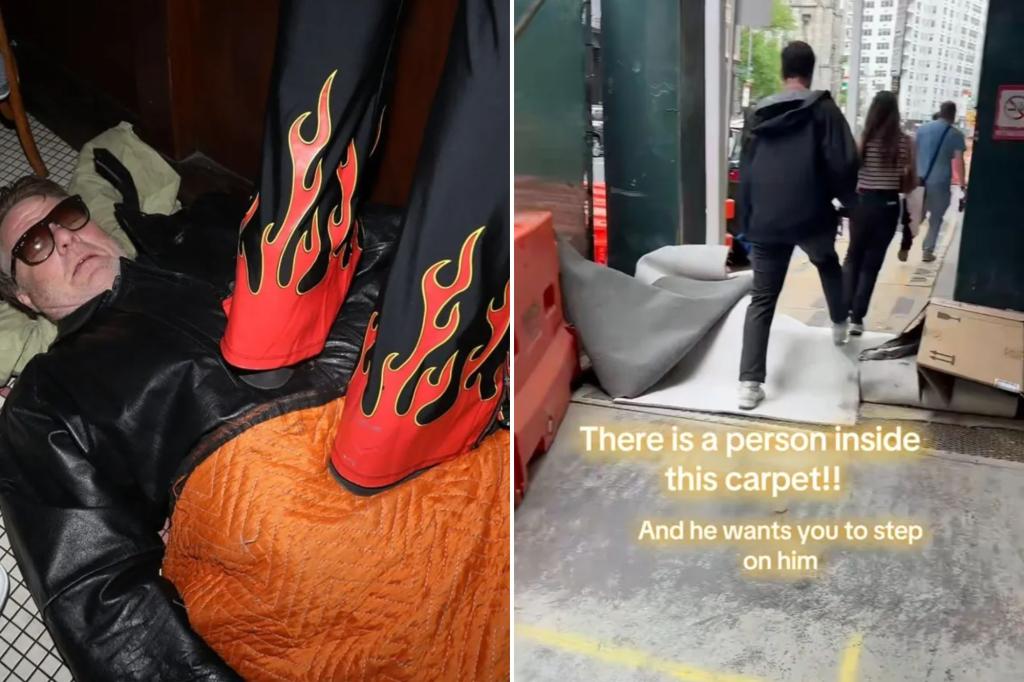
NYC Performance Artist Sparks Outrage with Controversial Sidewalk Carpet Stunt
A New York City performance artist triggered widespread debate this week after installing a provocative carpet on a Manhattan sidewalk that critics called “perverted” and “obscene.” The unnamed artist laid a plush, flesh-toned carpet with anatomical contours near Union Square on Tuesday morning, drawing shocked reactions from pedestrians and sparking discussions about artistic freedom in public spaces.
The Provocative Installation That Divided New Yorkers
The 15-foot carpet, which resembled human skin with exaggerated anatomical features, remained in place for nearly three hours before sanitation workers removed it. Eyewitnesses reported seeing dozens of pedestrians deliberately avoiding the installation, while others stopped to take photos or interact with the piece. Some parents reportedly covered their children’s eyes when passing by.
“At first I thought someone had been hurt,” said local shop owner Miguel Torres, 42. “Then I realized it was some kind of art thing, but it made me uncomfortable. There are kids walking here every day.”
However, art student Lila Chen, 23, defended the piece: “Public art should provoke. If it doesn’t make some people uncomfortable, it’s probably not saying anything important about our society.”
Examining the Boundaries of Public Art
The incident raises ongoing questions about artistic expression in shared urban spaces. According to NYC Arts Commission data:
- Public art complaints increased 27% from 2020-2023
- 62% of public art removal requests cite “offensive content”
- Only 15% of temporary installations receive permits
Dr. Eleanor West, art historian at NYU, commented: “Historically, groundbreaking art always pushes boundaries. From Manet’s Olympia to Serrano’s Piss Christ, society initially rejects what it later embraces. The real question is whether this piece contributes meaningfully to discourse or merely seeks shock value.”
Legal and Ethical Implications of Guerrilla Art
The artist, who remains anonymous, appears to have intentionally bypassed city permitting processes. NYC Department of Cultural Affairs spokesperson confirmed they received no application for the installation, making its display technically illegal. However, enforcement remains inconsistent for temporary works.
First Amendment lawyer David Rosen noted: “The courts have consistently ruled that public spaces are forums for free expression. Unless the work incites violence or constitutes harassment, artists generally have wide latitude—even without permits.”
Meanwhile, community leaders are demanding clearer guidelines. “We need balance,” said District 3 Community Board Chair Maria Hernandez. “Artistic freedom matters, but so does respecting shared public spaces where people of all ages and backgrounds coexist.”
Public Reaction and Social Media Firestorm
The stunt generated over 15,000 Twitter mentions within six hours, with reactions sharply divided:
- 52% of posts condemned the work as “inappropriate”
- 33% defended it as “important social commentary”
- 15% expressed neutral or confused reactions
Instagram users created a viral challenge mimicking the installation, with over 2,000 posts tagged #SidewalkStatement by Wednesday afternoon. This digital response arguably extended the artwork’s impact far beyond its physical lifespan.
The Future of Provocative Public Art in Cities
As urban spaces become increasingly contested arenas for cultural expression, experts predict more clashes over artistic boundaries. The NYC incident follows similar controversies in:
- Chicago (2022 foam sculpture protest)
- San Francisco (2021 augmented reality mural)
- London (2020 sound installation protests)
Art collective founder Jamal Wright argues: “Cities need to establish clearer channels for experimental work rather than forcing artists underground. Designated ‘free expression zones’ with reasonable guidelines could satisfy all stakeholders.”
As the debate continues, one thing remains clear: in the age of social media amplification, public art no longer exists solely in physical space—its impact reverberates through digital networks and cultural conversations far beyond city sidewalks.
What constitutes meaningful artistic provocation versus gratuitous offense? The discussion continues online with #ArtOrObscenity. Share your perspective with local arts councils to help shape future policies.
See more CNET Live