
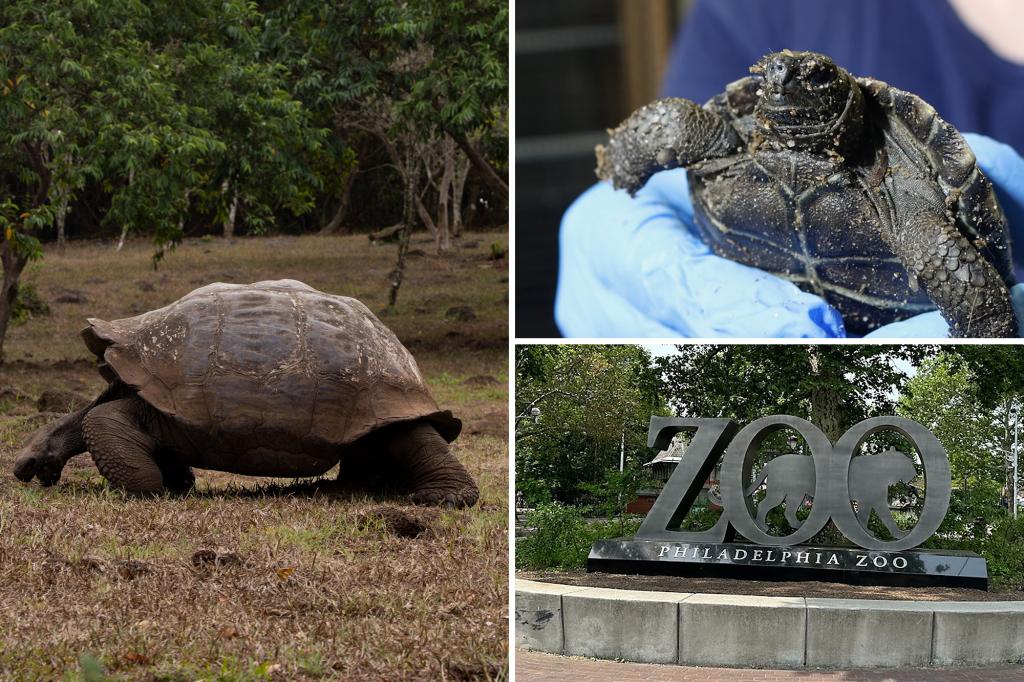
Historic Milestone: Philadelphia Zoo’s Centenarian Tortoises Become First-Time Parents
In an extraordinary breakthrough for endangered species conservation, the Philadelphia Zoo announced the successful hatching of Galapagos tortoise offspring from its nearly 100-year-old breeding pair. The historic event marks the first reproductive success for the venerable tortoises since their arrival at the zoo in 1936, offering new hope for the future of these iconic giants.
A Century in the Making: The Long Road to Reproduction
The zoo’s male tortoise, Pepe, estimated at 97 years old, and female Sweet Pea, believed to be 93, have lived at the institution for 87 years without producing offspring. Their advanced age makes the successful breeding particularly remarkable—Galapagos tortoises typically reach sexual maturity between 20-25 years in the wild but may breed much later in captivity.
“This is the wildlife equivalent of a 90-year-old couple having their first child,” said Dr. Elena Castillo, the zoo’s senior herpetologist. “We’d nearly given up hope after decades of unsuccessful mating attempts. The hatchlings represent a small miracle of persistence—both by the animals and our conservation team.”
Key factors in the successful breeding included:
- Specialized dietary adjustments to enhance fertility
- Environmental modifications mimicking Galapagos dry season conditions
- Advanced veterinary monitoring of reproductive health
Galapagos Tortoises: Giants on the Brink
The newborn tortoises—three healthy hatchlings measuring just 3 inches long—could eventually grow to exceed 500 pounds, like their parents. Their species (Chelonoidis nigra) has faced catastrophic population declines, with historical numbers dropping from 250,000 to just 15,000 today due to:
- 19th-century whaler and pirate exploitation (used as ship provisions)
- Habitat destruction from invasive species
- Climate change impacts on nesting beaches
According to the Galapagos Conservancy, only 12 of the original 15 subspecies remain, with some populations reduced to single individuals. The Philadelphia hatchlings represent crucial genetic diversity for captive breeding programs worldwide.
Behind the Scenes: The Science of Late-Life Reproduction
The zoo’s reproductive success challenges conventional wisdom about tortoise fertility. Recent studies suggest Galapagos tortoises may maintain reproductive capability far longer than previously believed:
| Age Range | Fertility Probability | Clutch Size |
|---|---|---|
| 20-50 years | 85% | 8-16 eggs |
| 50-80 years | 60% | 4-10 eggs |
| 80+ years | 15% | 1-4 eggs |
“These tortoises rewrite our understanding of vertebrate reproduction,” noted Dr. James Liu, a wildlife endocrinologist unaffiliated with the zoo. “Their telomeres—protective DNA caps—appear uniquely resistant to age-related shortening. This could have implications for human longevity research.”
Conservation Implications for Endangered Species
The Philadelphia breakthrough arrives as zoos face increasing pressure to demonstrate conservation impact. With 60% of the world’s turtle and tortoise species threatened, successful captive breeding programs have become essential safeguards against extinction.
The hatchlings will remain off-exhibit for 18 months while caretakers monitor their development. Eventually, they may join the Species Survival Plan—a cooperative breeding program among accredited zoos to maintain genetically diverse assurance populations.
Critics of captive breeding argue that habitat protection should take priority. “While every hatchling helps, we’re treating symptoms rather than causes,” cautioned marine biologist Alicia Fernandez. “Without addressing climate change and invasive species in the Galapagos, these births are just delaying inevitable extinction.”
What’s Next for the Tortoise Family?
Zoo officials plan to:
- Conduct genetic testing to determine hatchling subspecies
- Share reproductive data with the Galapagos National Park
- Implement new enrichment protocols based on this success
The centenarian parents show no signs of slowing down—keepers recently observed renewed courtship behavior. Meanwhile, the three hatchlings have become unexpected social media stars, with the zoo’s #TinyTitans campaign raising over $50,000 for tortoise conservation in one week.
As climate change accelerates species decline, such victories take on profound significance. “These tortoises witnessed the Great Depression and World War II,” reflected zoo CEO Dr. Mark Owens. “Now they’re giving future generations a chance to witness the recovery of their species.” Support this historic conservation effort by visiting PhiladelphiaZoo.org/TortoiseConservation.
See more CNET Live