
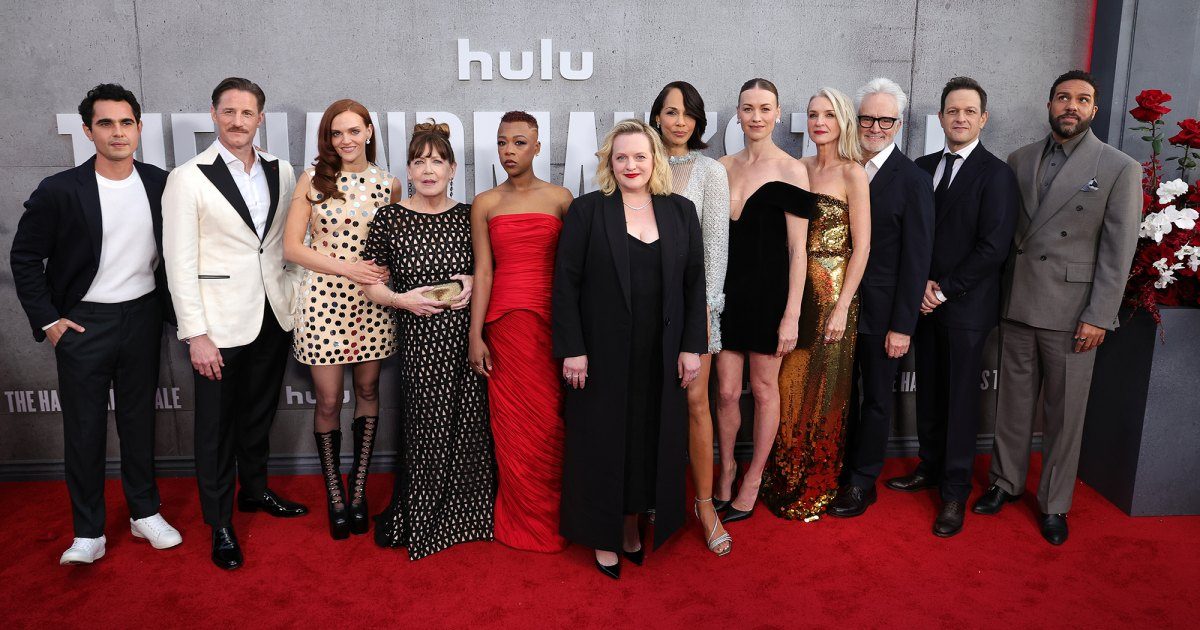
The Handmaid’s Tale Cast Reveals the Secret Behind Their Iconic Robes
In the dystopian world of The Handmaid’s Tale, the blood-red robes and white-winged bonnets of the Handmaids have become symbols of oppression and resistance. Elisabeth Moss and her co-stars recently unveiled the meticulous craftsmanship and collaborative effort behind these haunting costumes. From fabric selection to psychological impact, the robes tell a story far deeper than their stark appearance suggests.
The Symbolism Woven Into Every Thread
Costume designer Natalie Bronfman, who joined the series in its third season, revealed that each robe undergoes a rigorous design process to reflect Gilead’s brutal regime. “The color red wasn’t chosen arbitrarily,” Bronfman explained. “It represents both the Handmaids’ fertility and the violence imposed upon them. The fabric had to feel heavy—almost suffocating—to mirror their reality.”
Key details about the robes:
- Fabric: A custom-dyed wool blend, chosen for its weight and drape
- Color: A specific shade of crimson, tested under various lighting conditions
- Bonnet wings: Designed to limit peripheral vision, reinforcing the Handmaids’ isolation
The Psychological Toll of Wearing Gilead’s Uniform
Elisabeth Moss, who plays June Osborne, shared how the costume affects her performance. “The moment I put on the robe, my posture changes. It’s like carrying the weight of every woman in Gilead,” she said. A 2021 study by the Journal of Costume Design found that restrictive costumes can heighten an actor’s emotional connection to their role by up to 40%—a phenomenon Moss and her co-stars frequently experience.
Ann Dowd (Aunt Lydia) added another layer: “The costumes create an instant hierarchy on set. When the Handmaids walk onto the Toronto filming locations in unison, even crew members fall silent. That’s the power of visual storytelling.”
Collaboration Between Cast and Costume Designers
Unlike typical productions where costumes are finalized before filming, The Handmaid’s Tale employs an adaptive approach. Bronfman works closely with actors to refine details—like how a bonnet tilts or how sleeves fray—to reflect character arcs. For instance, June’s robe gradually shows more wear and tear as her defiance grows.
Madeline Brewer (Janine) noted, “Natalie once added a nearly invisible stitch to my collar after I mentioned Janine’s lingering hope. Those subtle touches inform how I move and react.”
From Screen to Cultural Icon
The Handmaid’s robes have transcended the show, appearing in protests worldwide. According to Amnesty International, the costume has been worn at over 500 women’s rights demonstrations since 2017. This unintended symbolism has influenced later seasons, with Bronfman incorporating slight design tweaks to reflect real-world activism.
However, some critics argue the robe’s adoption dilutes its fictional horror. Cultural analyst Dr. Priya Murthi counters, “Its use in protests proves art can fuel change. The costume is no longer just Gilead’s—it’s a shield for those fighting oppression.”
What’s Next for Gilead’s Costumes?
With the series concluding after six seasons, Bronfman hints at archival exhibitions to preserve the costumes’ legacy. Meanwhile, Moss reflects on the robe’s enduring impact: “Years from now, when people see that red, they’ll remember June’s story—and the stories of countless women who’ve reclaimed it.”
For fans eager to delve deeper, Hulu’s behind-the-scenes documentary Dressing Gilead offers an exclusive look at the costume department’s process. The robes may define Gilead’s cruelty, but as both art and activism, they’ve become something far more powerful.
See more CNET Live