
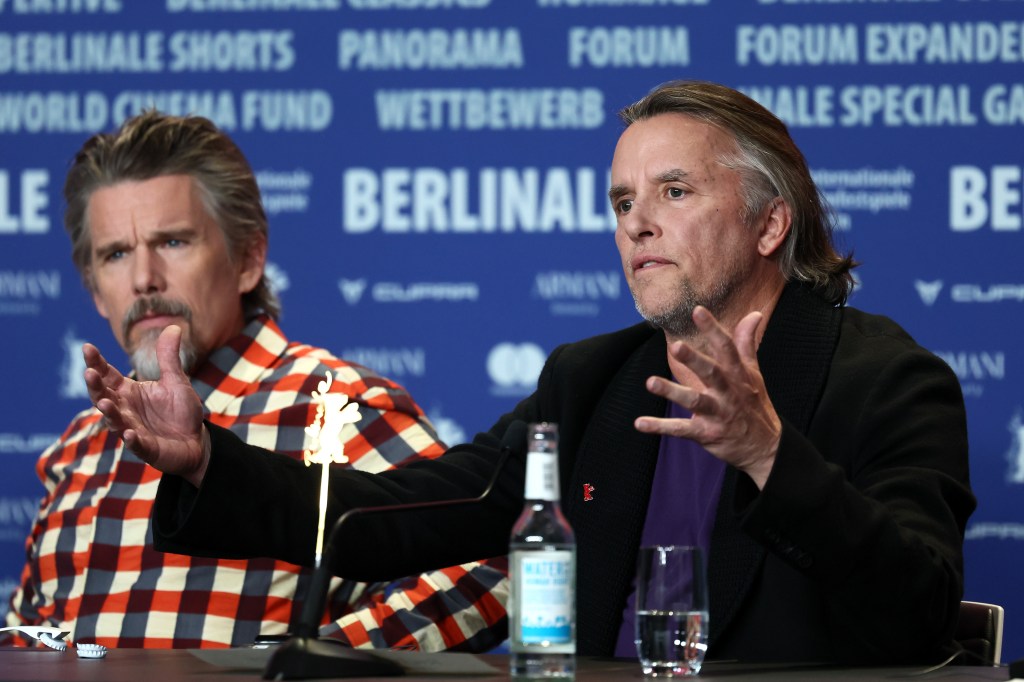
Inside the Minds of Richard Linklater and Ethan Hawke: A Deep Dive into ‘Blue Moon’
Renowned filmmaker Richard Linklater and actor Ethan Hawke have long been known for their dynamic collaborations, crafting narratives that resonate deeply with audiences. Their latest project, ‘Blue Moon’, marks another chapter in their creative journey together. In this article, we explore the insights shared by Linklater and Hawke, delving into the motivation, artistic choices, and personal connections that shaped this intriguing film.
The Genesis of ‘Blue Moon’
The inception of ‘Blue Moon’ can be traced back to a conversation between Linklater and Hawke that centered on the themes of time and human connection. Linklater, known for his philosophical explorations in films like ‘Before Sunrise’ and ‘Boyhood’, sought to create a narrative that captures the essence of fleeting moments. Hawke, who has been a frequent collaborator with Linklater, expressed his desire to explore the emotional landscapes that define our lives.
“We wanted to create a film that feels like a conversation,” Hawke remarked during a recent interview. “Something that captures the beauty and complexity of relationships, much like a jazz improvisation.” This analogy captures the improvisational nature of their creative process, where each scene unfolds organically, allowing the actors to explore their characters in real-time.
Thematic Depth and Artistic Motivation
At its core, ‘Blue Moon’ examines the interplay of dreams and reality. The film follows a group of friends as they navigate their aspirations, fears, and the passage of time. Linklater’s signature style, characterized by long takes and naturalistic dialogue, invites viewers to immerse themselves in the characters’ lives.
- The Role of Time: Time is a recurring motif in Linklater’s work, and ‘Blue Moon’ is no exception. The narrative unfolds over a single night, emphasizing the fleeting nature of moments that often go unnoticed.
- Human Connections: The film highlights the importance of relationships, showcasing how they can shape our identities and influence our paths. Linklater and Hawke both believe that the authenticity of human connection is what makes a story resonate.
- Dreams vs. Reality: The characters in ‘Blue Moon’ grapple with their dreams and the reality of their lives. This tension serves as a driving force in the narrative, prompting viewers to reflect on their own aspirations.
Character Development and Actor Insights
In ‘Blue Moon’, both Linklater and Hawke placed a strong emphasis on character development. Hawke, who plays the lead role, describes his character as “a mirror reflecting the struggles many of us face.” This sentiment is echoed in Linklater’s direction, which encourages actors to bring their own experiences to the table.
“I always tell my actors to find a piece of themselves in their characters,” Linklater explained. “It’s about authenticity. The more real they can make it, the more it resonates with the audience.” This approach fosters a collaborative environment, where actors are not just following a script but are active participants in shaping their characters’ journeys.
The Creative Process: A Collaborative Symphony
The creative process behind ‘Blue Moon’ is a testament to the synergy between Linklater and Hawke. Their collaboration goes beyond the screen; it’s a meeting of minds that values spontaneity and exploration. Throughout the production, they conducted numerous brainstorming sessions, discussing ideas, themes, and character arcs.
“We’d often sit around and talk about life, art, and everything in between,” Hawke shared. “Those conversations would spark ideas that found their way into the film.” This organic development is reminiscent of jazz musicians riffing off each other, creating something beautiful and unique in the moment.
Visual Storytelling and Cinematic Techniques
Linklater’s visual storytelling in ‘Blue Moon’ is marked by a blend of realism and dreamlike sequences. Cinematographer Lee Daniel crafted a visual palette that reflects the emotional tone of the film. The use of natural light and on-location shooting enhances the authenticity of the narrative, drawing viewers into the characters’ world.
“We wanted the visuals to feel grounded,” Linklater said. “But we also wanted moments that felt surreal, reflecting the characters’ inner lives.” This duality allows the film to traverse different emotional landscapes, making it a rich viewing experience.
Reception and Impact
Upon its release, ‘Blue Moon’ garnered critical acclaim for its poignant exploration of human relationships and the passage of time. Reviewers praised Linklater’s direction and Hawke’s performance, highlighting the film’s ability to resonate with audiences on a personal level.
“It’s a film that invites you to reflect on your own life,” one critic noted. “Linklater and Hawke have created a work of art that feels both intimate and universal.” This sentiment encapsulates the film’s impact, as it encourages viewers to engage with their own dreams and connections.
Conclusion: A Lasting Collaboration
As we delve into the minds of Richard Linklater and Ethan Hawke, it becomes evident that ‘Blue Moon’ is more than just a film; it’s a reflection of their artistic journey together. Through their collaborative process, they have crafted a narrative that speaks to the heart of human experience.
Their insights into the creative process reveal a dedication to authenticity and a desire to explore the complexities of life. ‘Blue Moon’ stands as a testament to the power of collaboration and the beauty of storytelling, inviting audiences to reflect on their own lives and the moments that define them.
In the ever-evolving landscape of cinema, Linklater and Hawke continue to inspire, pushing the boundaries of storytelling and reminding us of the profound connections we share with one another.
See more CNET Live