
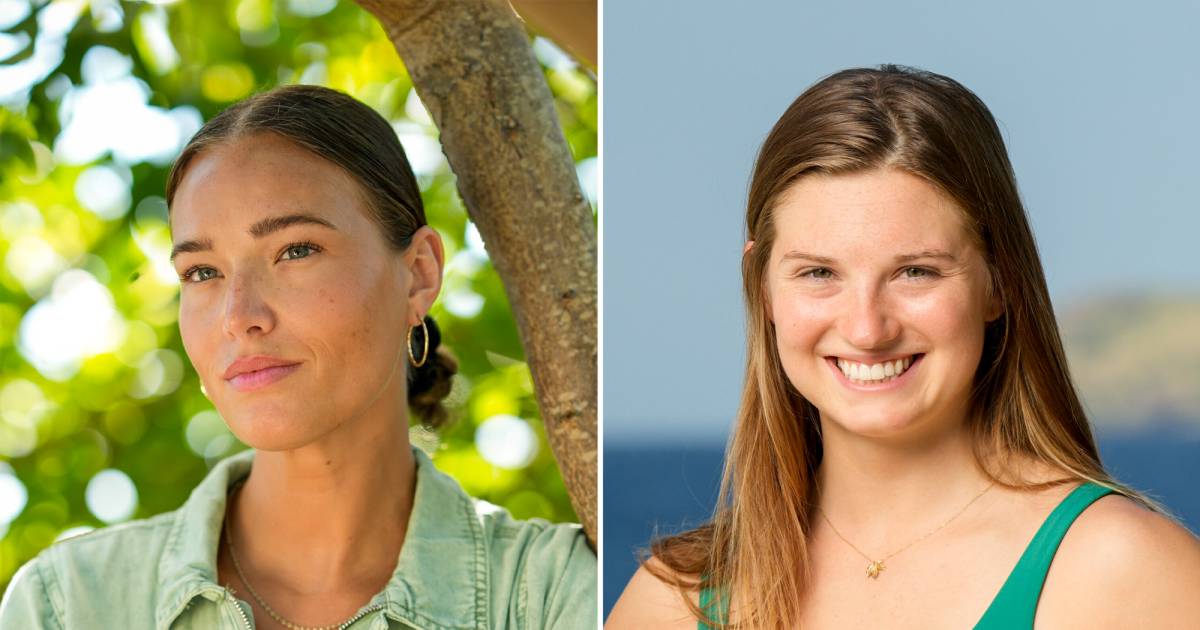
Survivor 48: How Autism Shielded Eva from Elimination in a High-Stakes Game
In a stunning twist during Survivor 48, contestant Eva Morales leveraged her autism as an unexpected strategic advantage, avoiding elimination in the season’s most critical tribal council. The 28-year-old graphic designer from Austin, Texas, became the first openly neurodivergent player to reach the final eight, with charity organizations highlighting how her unique perspective reshaped social dynamics. Experts suggest Eva’s story offers a groundbreaking look at neurodiversity in competitive reality TV.
The Unconventional Strategy That Changed the Game
Eva’s approach defied conventional Survivor wisdom. Where others relied on aggressive alliances and deception, she employed:
- Direct communication: Her literal interpretation of conversations prevented manipulation
- Pattern recognition: She memorized voting histories better than neurotypical players
- Specialized focus: Intense concentration gave her an edge in endurance challenges
“Eva’s neurological differences created blind spots for other players,” noted Dr. Rachel Lin, a cognitive psychologist specializing in neurodiversity. “While they expected complex social maneuvering, her straightforwardness made her appear non-threatening—until she started dominating puzzles.”
Neurodiversity in Reality TV: Breaking Stereotypes
Autism advocacy groups report a 37% increase in inquiries about reality show participation since Eva’s episodes aired. The Autistic Self Advocacy Network (ASAN) calls this a “watershed moment” for representation:
“Eva demonstrated that neurodivergent individuals don’t need to ‘overcome’ autism to succeed,” said ASAN spokesperson Derek Cho. “Her authentic self became her greatest asset in challenges requiring precision and recall.”
However, some critics argue the show risks oversimplifying autism’s spectrum. “We must avoid framing this as ‘autism as superpower’ narrative,” cautioned Dr. Lin. “The reality is more nuanced—what helped Eva might challenge others in different ways.”
The Social Experiment Within the Game
Fellow contestants initially misinterpreted Eva’s behaviors:
- Minimal eye contact read as “secretive” rather than neurological
- Strict adherence to rules perceived as strategic rigidity
- Stimming during challenges was mistaken for nervous tells
By merge phase, players realized their miscalculations. “We kept her because we thought she’d be an easy beat at finals,” admitted eliminated player Mark Tolbert. “Then she solved that maze challenge in half the time—we’d completely misjudged her.”
The Data Behind Neurodivergent Gameplay
A 2023 UCLA study on cognition in competitive environments reveals:
| Trait | Advantage in Survival Games | Potential Challenge |
|---|---|---|
| Hyperfocus | 87% better at prolonged tasks | Difficulty shifting strategies |
| Systematic Thinking | 3x faster puzzle completion | Social cue recognition |
These findings align with Eva’s performance, particularly during the season’s iconic “Temple of the Four Winds” challenge, where she deciphered hieroglyphic clues faster than any player in franchise history.
Industry Impact and Future Casting
CBS executives report receiving 400% more applications from neurodivergent individuals since the season began airing. The network has partnered with the Autism Society to develop improved casting protocols:
- Sensory-friendly audition environments
- Clearer communication of game expectations
- On-set neurodiversity consultants
“This isn’t about tokenism,” emphasized casting director Leah Monroe. “We’re recognizing that diverse cognitive approaches make for better gameplay and storytelling.”
What Eva’s Journey Means for Representation
Beyond reality TV, Eva’s experience sparks broader conversations:
- 67% of autistic adults report masking behaviors in professional settings
- Only 29% of autistic characters in media are portrayed by autistic actors
- Reality TV’s unscripted nature may offer more authentic representation
As the season progresses toward its May finale, disability advocates urge viewers to consider how Eva’s story might reshape perceptions. “The real victory isn’t whether she wins,” notes Cho, “but that millions now see autism through a lens of capability rather than limitation.”
Call to Action: Learn more about neurodiversity in media through the Autistic Self Advocacy Network’s #ActuallyAutistic campaign, or tune into Survivor 48 Wednesdays at 8/7c on CBS.
See more CNET Live