
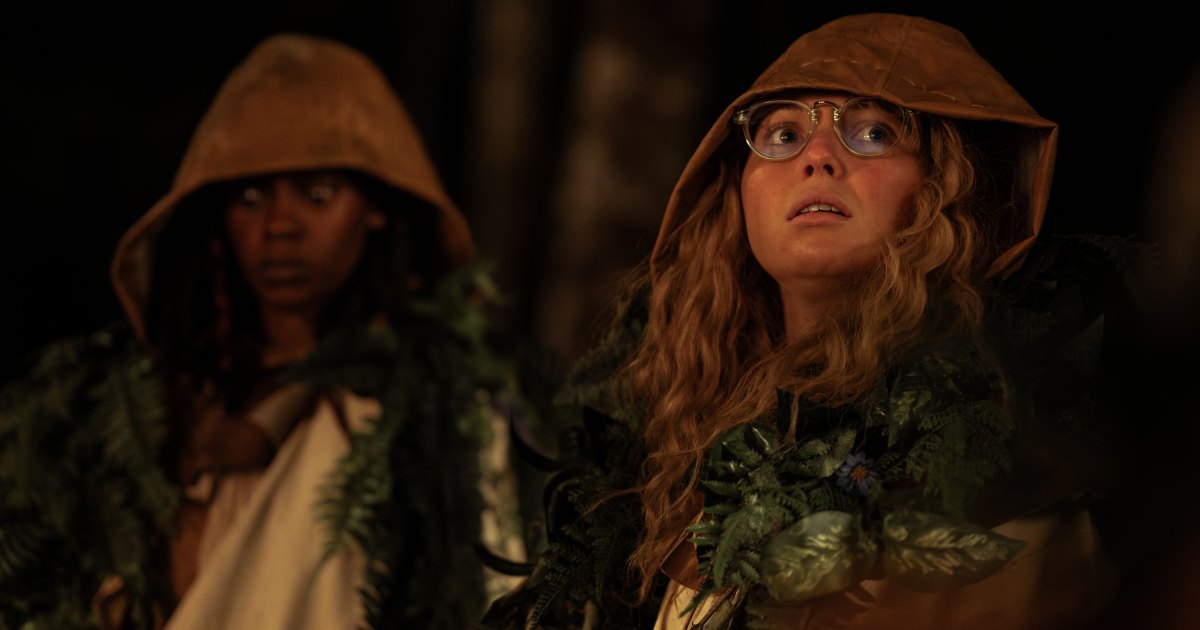
Samantha Hanratty Sets the Record Straight on the Misty Fan Theory in Yellowjackets
In the ever-evolving landscape of television, fan theories often take on a life of their own, especially in shows as rich and layered as Showtime’s Yellowjackets. Recently, Samantha Hanratty, who brings the enigmatic character Misty to life, sat down for an enlightening interview where she addressed some of the most prevalent fan theories surrounding her role. Hanratty’s insights not only challenge popular beliefs but also provide a deeper understanding of Misty’s motivations and character development throughout the series.
The Allure of Fan Theories in Yellowjackets
Yellowjackets has captivated audiences with its intricate storytelling and complex characters. The show masterfully intertwines themes of survival, trauma, and the haunting effects of the past. As viewers engage with this multifaceted narrative, theories sprout like weeds, each one attempting to decode the mysteries of the characters’ motivations and actions. Misty, in particular, has become a focal point for speculation, inspiring discussions that range from her psychological profile to her role within the group dynamics.
Fan theories often stem from clues left throughout the narrative, and Misty’s character has not been immune to this scrutiny. Her actions, decisions, and relationships with other characters have led fans to form varying interpretations. While some see her as a villain, others view her as a tragic figure, shaped by the circumstances of her past. Hanratty’s recent comments shed light on these interpretations, prompting fans to reevaluate their perspectives on Misty.
Misty’s Character: A Complex Portrait
During the interview, Hanratty emphasized that Misty is not easily categorized as simply “good” or “evil.” Instead, she is a product of her environment, influenced by the traumatic events shared with her fellow survivors. The show dives deep into the psychological impact of their harrowing experiences, and Misty’s character arc reflects this complexity.
- Survivor’s Guilt: Misty grapples with feelings of inadequacy and guilt, particularly regarding her role in the group. Her desire to be accepted often leads her to make questionable decisions.
- Desire for Connection: Misty’s actions are often driven by a profound need for connection and acceptance, which can manifest in ways that may be perceived as manipulative or self-serving.
- Resourcefulness: Throughout the series, Misty displays an impressive level of resourcefulness and intelligence, traits that make her both an asset and a potential threat within the group.
Hanratty pointed out that Misty’s characterization is intentionally layered, allowing for multiple interpretations. The ambiguity surrounding her motives invites viewers to engage critically with her storyline, making her one of the most compelling figures in Yellowjackets.
Addressing the Fan Theory: Is Misty the True Villain?
One of the most pervasive fan theories suggests that Misty embodies the role of the “true villain” within the group. This theory posits that her actions, particularly in the wilderness, are driven by a sinister desire for power and control. However, Hanratty challenges this notion, arguing that Misty’s behavior is more indicative of a deep-seated need for validation rather than outright malice.
“Misty is a survivor at heart,” Hanratty explained. “Her actions may seem villainous, but they stem from her fear of abandonment and her desperate need to belong. It’s essential to view her through that lens.” This perspective invites fans to reconsider their stance on Misty and to recognize the tragic elements of her character.
The Impact of Trauma on Character Development
The trauma experienced by the characters in Yellowjackets plays a pivotal role in shaping their identities and actions. Hanratty highlighted that Misty’s journey is a reflection of how trauma can distort one’s sense of self and morality. The series presents a stark portrayal of how extreme circumstances can lead to fractured psyches and complicated interpersonal relationships.
- Trauma Responses: Misty’s behavior can be seen as a response to her traumatic experiences, leading her to act in ways that may not align with societal norms.
- Psychological Complexity: The psychological nuances of her character are crafted to provoke empathy and understanding, even when her actions are questionable.
- Group Dynamics: Misty’s interactions with other characters reveal the intricacies of group dynamics under duress, showcasing how alliances can shift and evolve.
As viewers witness the fallout from their shared trauma, it becomes clear that Misty is not merely a villain; she is a survivor navigating the complexities of her circumstances.
Fan Reactions and Interpretations
Following Hanratty’s insights, fan reactions have varied widely. Some fans have embraced her perspective, finding a renewed sense of empathy for Misty. Others remain entrenched in their theories, arguing that her actions are too manipulative to overlook. This dichotomy reflects the broader conversation surrounding character morality in complex narratives.
The diversity of interpretations is a testament to the show’s ability to provoke thought and discussion. Fans have taken to social media, sharing their thoughts on Misty’s character and how Hanratty’s comments might influence their understanding of her motivations.
Conclusion: A Character Worth Understanding
Samantha Hanratty’s revelations about Misty offer a fresh lens through which to view a character often misunderstood by audiences. By setting the record straight on fan theories, she invites viewers to engage with Misty’s complexities rather than reduce her to a simple archetype. As Yellowjackets continues to unfold, the exploration of Misty’s character serves as a reminder of the intricate nature of humanity—where motivations are multifaceted, and every action is deeply rooted in personal history.
As the series progresses, audiences are encouraged to reflect on their interpretations and consider the broader themes of trauma and survival that Yellowjackets so poignantly explores. After all, the essence of storytelling lies in understanding and empathy, and Misty’s journey is a vital part of that narrative tapestry.
See more CNET Live